CURATORSHIP

Idea by Juan Carlos Lérida.
Flamenco improvisations born in Barcelona in 2019, where bastards and legitimate children, faithful and promiscuous, audience and artists come together to move the palos of the TABLAO.
Postablao is elastic, mutant, unknown.
Postablao is a displaced landscape.
Idea and coordination: Juan Carlos Lérida
Guest.
Costumes and aesthetics: Eugenia Gusmerini
Postablao has taken place at:
Pla Roig https://plaroig.com/
José de la Vega academy
La Mercè Festival 2025
POSTABLAO
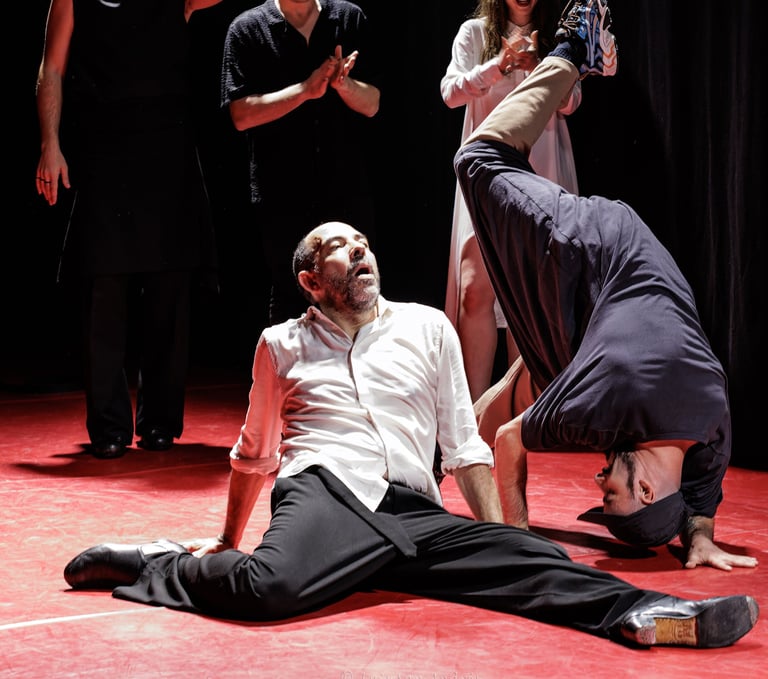

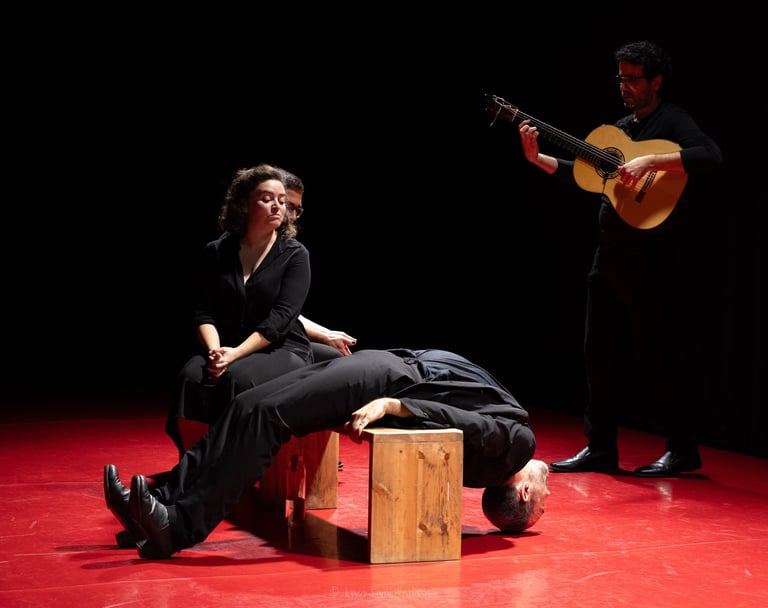
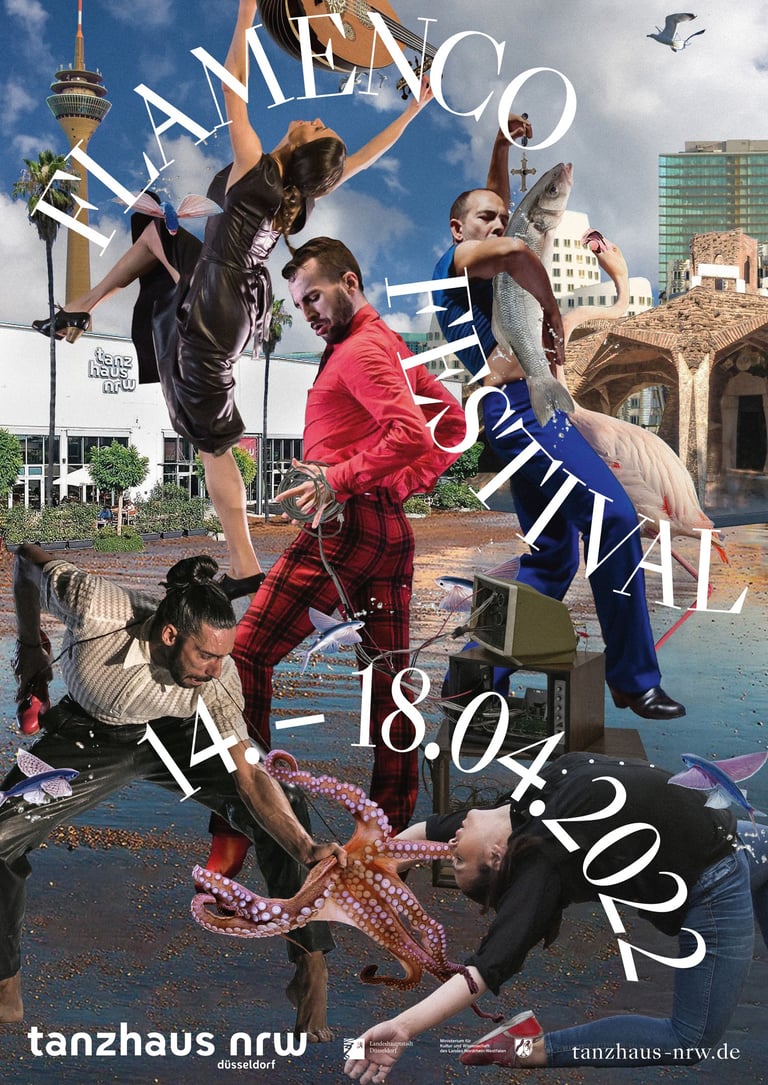
The Tanzhaus-NRW Flamenco Festival in Düsseldorf (Germany), curated by Juan Carlos Lérida, opened from 2021 to 2023 as a space for reflection on community and the conception of new post-pandemic scenarios. It brought together artists who addressed current social issues and developed the tradition of flamenco from their own contemporary perspectives, proposing a lively dialogue between past and present.
The program included performances that combined the classical approach to flamenco with influences from electronic music, urban dance styles, and other contemporary expressions. In addition, there were talks—both in person and virtual at tanzhaus nrw—that stimulated the exchange of ideas, workshops that invited the public to experience dance and music firsthand, There were also improvisational performances called IM FLAME, which invited flamenco, electronic music, and urban dance artists to participate in improvisations that crossed generations and styles.
https://tanzhaus-nrw.de/en/specials/festival/flamenco-festival-2021
https://tanzhaus-nrw.de/en/specials/festival/flamenco-festival-2022
https://tanzhaus-nrw.de/de/specials/festival/flamenco-festival-2023
TANZHAUS- NRW FLAMENCO FESTIVAL
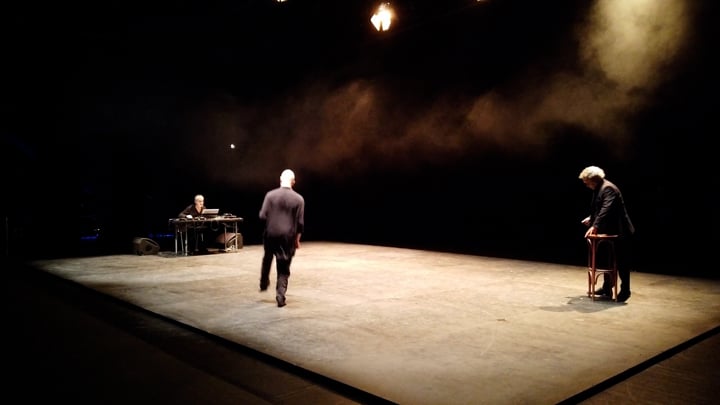
The Flamenco Empírico cycle, an original idea curated by Juan Carlos Lérida for Mercat de les Flors (2009), Flamenco Ciutat Vella (2010-2012), Festival flamenco Londres 2013, and Ciutat Flamenco (2013-2014)—invited flamenco that connected with the social, cultural, and political realities of the moment from 2009 to 2014. Among the objectives were to offer spaces for creation and transmission, as well as a place for experimentation and exhibition of works in progress by young creators.
A cycle open to experience that allowed the state of evolution and transformation of flamenco art to be shown and developed.
“There is a flamenco that needs to dig into its own and other spaces, which is generated from recognizing, studying, questioning, reflecting, and restructuring established patterns. From these experiences, useful and coherent references are born that propel it towards a contemporary language, uncovering new theories, qualities, and forms.”
FLAMENCO EMPÍRICO CYCLE